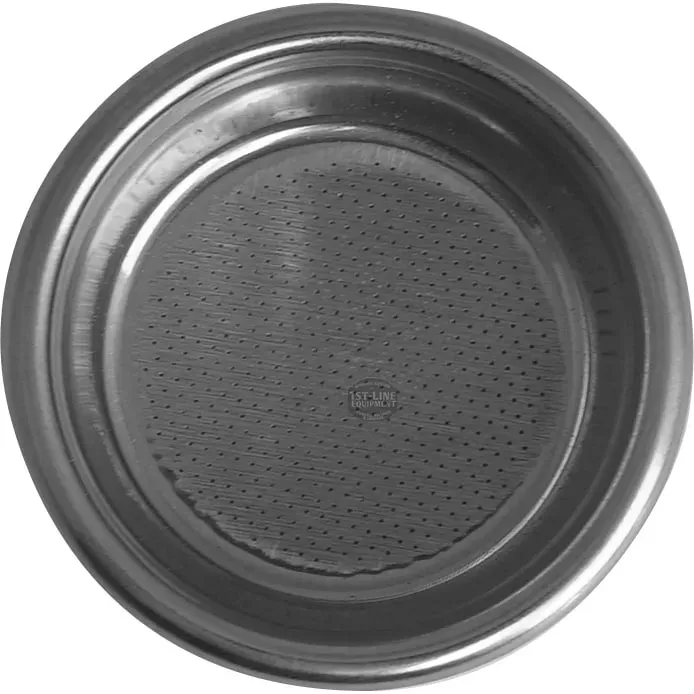
Choosing the right replacement espresso filter basket is essential for achieving consistent espresso extraction, maintaining proper portafilter fit, and getting the best performance from your espresso machine. Whether you are replacing a worn-out filter basket, upgrading to a precision basket, switching from a pressurized to a non-pressurized design, or selecting a basket for a different coffee dose, understanding the available options can help you make an informed purchase.
Espresso filter baskets are available in various diameters, capacities, materials, and designs. Common sizes include 51mm, 53mm, 54mm, 57mm, and 58mm, but the correct basket depends on your espresso machine, portafilter, and the specific basket design. A basket that fits one machine may not fit another, even when both use a similar nominal portafilter diameter. The same applies to similar portafilters from the same manufacturer.
This guide explains how to choose a replacement espresso basket, with an emphasis on basket types, basket sizing, coffee capacity, portafilter compatibility, and the differences between standard, precision, ridged, ridgeless, single-wall, and double-wall baskets.
1. Check Your Espresso Machine and Portafilter Specifications
Before purchasing a replacement espresso filter basket, identify the espresso machine model and verify the portafilter specifications. This is the most important step in avoiding an incorrect purchase.
Although espresso baskets are often described by their nominal diameter, such as 58mm or 54mm, diameter alone does not guarantee compatibility. The basket’s rim, depth, base diameter, sidewall shape, and retention characteristics can all affect whether it fits correctly inside a portafilter.
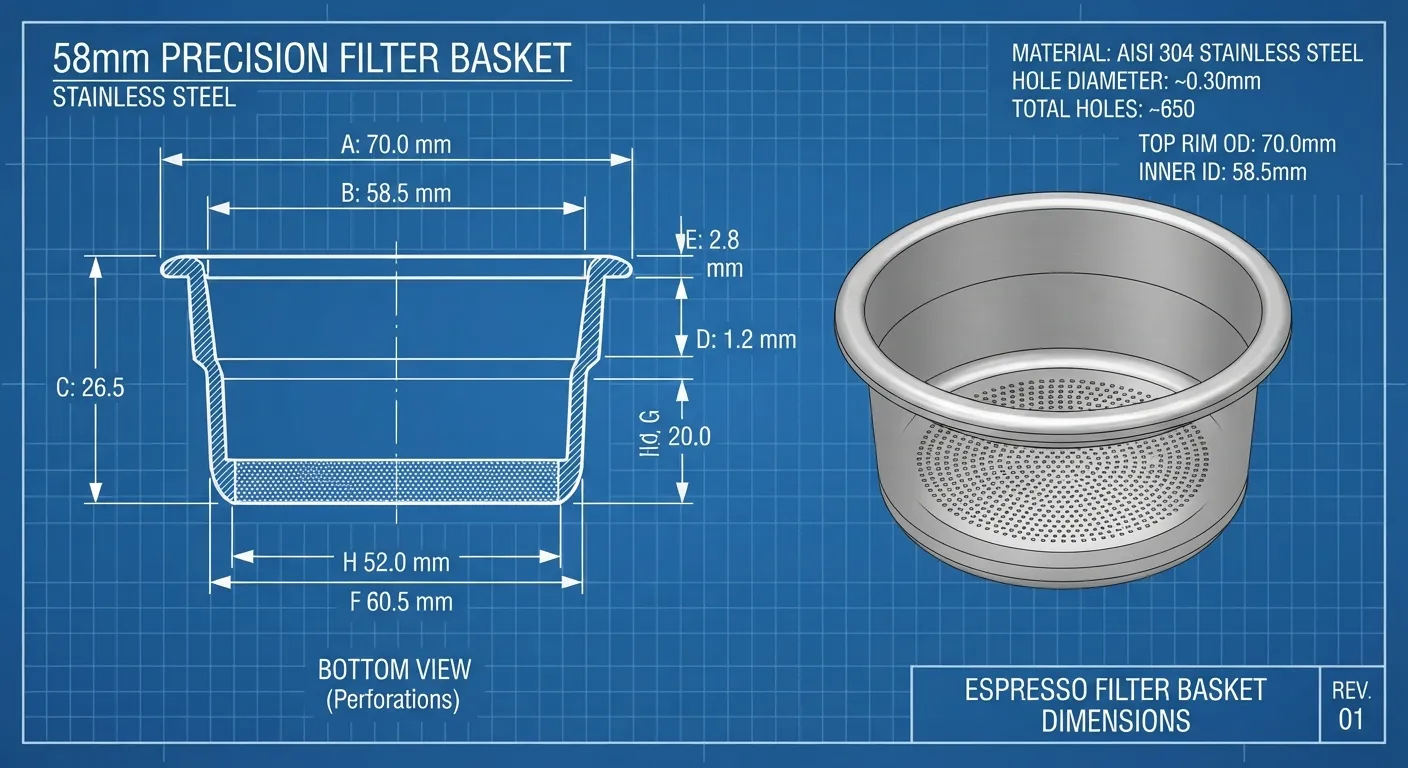
For example, two espresso machines may both use a 58mm portafilter, but their baskets may differ in:
- Outer rim diameter and thickness.
- Basket height and internal depth.
- Base diameter and tapered shape.
- Rim profile and retaining ring fit.
- Number and arrangement of extraction holes.
- Required coffee dose and available headspace.
Always check the exact machine model and portafilter design before ordering a replacement basket. If possible, compare the original basket with the replacement basket’s listed dimensions and manufacturer compatibility information.
Common Espresso Basket Diameters
These are general espresso basket sizes, not universal compatibility standards. The actual basket dimensions and machine requirements should always be confirmed before purchasing.
2. Understand Espresso Basket Capacity
Espresso filter baskets are designed to hold different amounts of ground coffee. Selecting the correct capacity helps match your preferred espresso recipe, beverage size, and extraction style.
Basket capacity is usually expressed in grams, although the actual dose a basket can accommodate depends on the coffee’s density, grind size, roast level, and desired headspace. A basket advertised as a 14g basket, for example, should not automatically be treated as suitable for every 14g recipe in every machine.
Single Espresso Baskets
Single espresso baskets are designed for preparing one espresso portion. They generally have a smaller coffee capacity than double baskets and often feature a tapered or curved internal shape.
Single baskets can be more challenging to dial in because their geometry may create a different flow pattern than a double basket. Some designs have a more pronounced taper, while others use a specialized hole pattern to improve extraction consistency.
When replacing a single espresso basket, verify:
- The intended dose range.
- The basket’s depth and shape.
- Compatibility with the portafilter.
- Whether the basket is designed for traditional single-shot preparation.
Double Espresso Baskets
Double baskets are among the most commonly used espresso filter baskets for home and commercial espresso preparation. They are designed for a larger coffee dose and are available in various capacities, including approximately 12g, 14g, 16g, 18g, and 20g designs, depending on the manufacturer.
Double baskets are often preferred for daily espresso preparation because they provide more flexibility in recipe development and can offer a more consistent puck geometry than some traditional single baskets.
Choose a double basket based on your preferred dose rather than selecting the largest basket that fits your portafilter.
Larger and Commercial-Dose Baskets
Some espresso baskets are designed for larger doses used in commercial or specialty espresso preparation. These may include baskets intended for 20g, 21g, 22g, or higher capacities.
Larger baskets require consideration of the portafilter depth, grouphead clearance, and machine-specific brewing configuration. A basket that physically fits the portafilter may not be suitable for the intended dose if it leaves insufficient headspace or changes the relationship between the coffee puck and the grouphead.
3. Choose the Right Espresso Basket Type
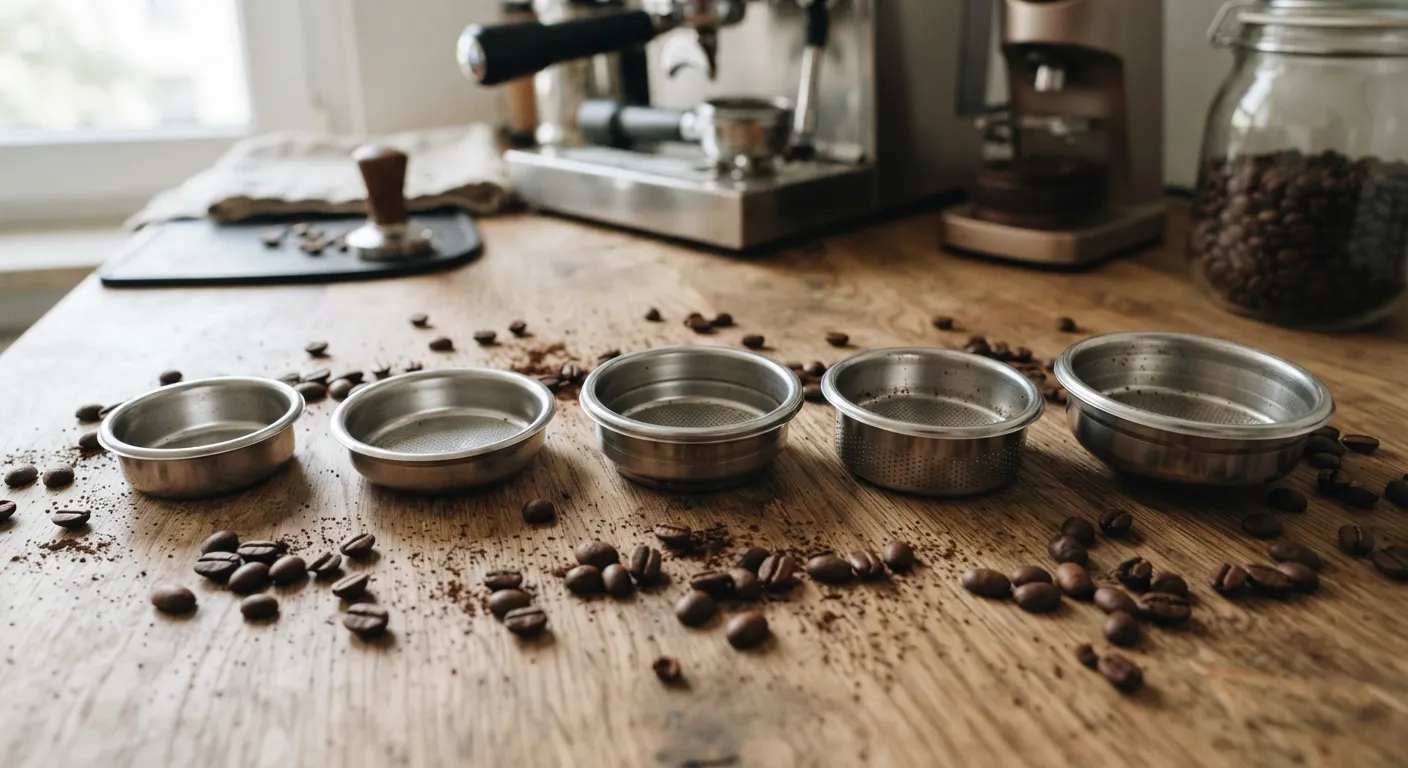
One of the most important decisions when purchasing a replacement espresso basket is selecting the appropriate basket type. Different basket designs influence how water flows through the coffee puck, how forgiving the extraction process is, and whether the basket is intended for freshly ground coffee or pre-ground coffee.
The main espresso basket types include:
- Standard baskets.
- Precision baskets.
- Ridged baskets.
- Ridgeless baskets.
- Single-wall baskets.
- Double-wall or pressurized baskets.
Some of these classifications describe different features of the same basket. For example, a basket can be both precision and ridgeless, or single-wall and ridged. Understanding each feature separately makes it easier to select the right replacement.
Standard Espresso Filter Baskets
Standard espresso baskets are commonly supplied with espresso machines and are designed for general-purpose espresso preparation. They may have a conventional hole pattern and manufacturing tolerances suitable for everyday use.
These baskets are often available as single, double, and larger-dose versions. Depending on the manufacturer, a standard basket may be made from stainless steel and designed with a ridged or ridgeless rim.
A standard replacement basket may be a practical choice when:
- You want to replace a damaged or worn basket.
- You want a basket similar to the original factory component.
- You are maintaining an espresso machine without changing the existing brewing setup.
- You need a compatible basket for a specific portafilter.
Standard baskets can vary considerably between manufacturers, so it is important to verify dimensions and capacity instead of assuming that all baskets of the same nominal size are interchangeable.
Precision Espresso Baskets
Precision espresso baskets are manufactured with tighter dimensional tolerances and more carefully controlled filtration-hole patterns than many conventional baskets. They are designed to provide more uniform water distribution through the coffee puck.
Precision baskets are popular among home baristas, specialty coffee enthusiasts, and commercial espresso users who want greater control over extraction.
Potential advantages include:
- More consistent filtration-hole geometry.
- Improved repeatability when using a suitable coffee recipe.
- Greater flexibility when adjusting grind size and dose.
- Compatibility with advanced espresso preparation techniques.
However, a precision basket does not automatically guarantee better espresso. Grinder quality, coffee freshness, distribution, tamping, water temperature, and brewing pressure also influence extraction results.
Precision baskets are often available in different capacities and shapes. Select a basket that matches your desired dose and verify that the basket’s dimensions are appropriate for your portafilter.
Ridged Espresso Baskets
Ridged espresso baskets feature a raised ring or groove around the outer portion of the basket. This design can help the basket remain secured in the portafilter through interaction with the portafilter’s retaining spring. A ridged basket can control over-tamping as the ridge can act as a stopping point.
Ridged baskets are common in original equipment and replacement espresso basket designs. The ridge may provide additional retention, but its exact shape and position vary between manufacturers.
When replacing a ridged basket, compare the following:
- The position and height of the ridge.
- The outer rim diameter.
- The basket depth.
- The portafilter retaining spring.
- The compatibility information provided by the manufacturer.
A ridged basket is not necessarily inferior to a ridgeless basket. The choice often depends on the machine’s original design, personal preference, and the desired ease of basket removal.
Ridgeless Espresso Baskets
Ridgeless baskets do not have the prominent retaining groove found on many traditional espresso baskets. They are frequently used by baristas who prefer a clean internal profile and convenient basket removal.
A ridgeless basket can make it easier to knock out the coffee puck or switch baskets during espresso preparation. However, the absence of a ridge does not mean that the basket will fit every portafilter.
The retaining spring must hold the basket securely, and the rim must be compatible with the portafilter. Some ridgeless baskets may fit more loosely or tightly depending on the spring and basket dimensions.
Ridgeless baskets are especially common among precision basket options. If upgrading from a ridged basket to a ridgeless design, confirm that the replacement is appropriate for your portafilter.
Single-Wall Espresso Baskets
Single-wall baskets, also known as non-pressurized baskets, are designed to allow espresso extraction through the holes in the basket base without relying on a separate pressure-generating outlet.
They are commonly used with freshly ground coffee and espresso grinders that can produce a consistent grind size.
Single-wall baskets give the user more direct control over extraction variables, including grind size, dose, tamping, and brewing pressure. As a result, they are often preferred by experienced baristas and users who want to fine-tune their espresso recipes and flavor profiles.
However, single-wall baskets can be less forgiving when the coffee is ground inconsistently or the puck is poorly distributed. Uneven extraction may occur if the coffee bed is not prepared correctly.
When selecting a single-wall espresso basket as a replacement, verify its dose range, dimensions, hole pattern, and suitability for your machine.
Double-Wall or Pressurized Espresso Baskets
Double-wall baskets, also called pressurized baskets, are designed to create additional resistance to water flow through the basket outlet. Unlike traditional single-wall baskets, they typically use a secondary pressure-generating structure.
Pressurized baskets are commonly used with entry-level espresso machines, pre-ground coffee, or setups where the user does not have access to a high-quality espresso grinder.
Potential benefits include:
- Greater tolerance for variations in grind size.
- Convenience when using pre-ground coffee.
- Assistance in generating brewing pressure under certain conditions.
- A useful option for beginners and some non-traditional espresso setups.
Double-wall baskets should not be confused with single-wall baskets that merely have thicker stainless steel construction. The distinguishing feature is the pressure-generating design, not merely the basket’s material thickness. Pressurized baskets will not offer the ability to change flavor profiles compared to single-wall espresso filter baskets.
Before ordering a double-wall espresso basket as a replacement, check whether your machine originally uses a pressurized basket and whether the replacement is compatible with your portafilter.
4. Compare Basket Size and Portafilter Compatibility
A replacement espresso basket must fit securely inside the portafilter. Nominal size is only one part of the compatibility equation.
For example, a 58mm basket may be designed for a specific commercial portafilter geometry, while another 58mm basket may have a different rim profile, depth, or retention requirements. Similarly, a basket advertised as 54mm may not fit every espresso machine using a 54mm portafilter.
Before purchasing, compare the following specifications:
If the original basket is available, measure it carefully and compare its dimensions with the replacement listing. When measurements are uncertain, manufacturer documentation is generally more reliable than assumptions based on nominal diameter alone.
5. Consider Stainless Steel and Basket Construction
Most modern espresso baskets are made from stainless steel, including AISI 304 stainless steel in many replacement and precision basket designs. Material specifications can be useful when comparing durability, corrosion resistance, and manufacturing quality.
However, the steel grade is only one consideration. Basket construction also includes the precision of the holes, the consistency of the rim, the shape of the basket, and the quality of the finishing process.
Look for clearly stated product specifications that identify:
- Material type.
- Basket diameter.
- Basket depth.
- Intended coffee capacity.
- Manufacturing origin, when provided.
- Compatibility with specific espresso machines.
Avoid selecting a basket solely because it is described as stainless steel. A compatible design with appropriate dimensions is more important than relying on material terminology alone.
6. Check Manufacturer Compatibility Information
Before purchasing a replacement espresso basket, consult the espresso machine manufacturer’s documentation or the basket manufacturer’s compatibility information.
This is particularly important when selecting baskets for specialized machines, older espresso models, or machines that use less common portafilter sizes.
A product listing may identify compatible machines, manufacturer part numbers, and alternative cross-references. These details can help determine whether a replacement basket is suitable for your equipment.
When reviewing compatibility information, check:
- The exact espresso machine model.
- The portafilter diameter.
- Whether the machine uses a pressurized or non-pressurized basket.
- The intended dose and basket depth.
- Whether the replacement is OEM or aftermarket.
- Any exclusions listed by the manufacturer.
OEM refers to an original equipment manufacturer component, while aftermarket refers to a replacement produced by a different supplier. An aftermarket basket may be designed to replace an OEM part, but the fit and specifications should be verified rather than assumed.
7. When Should You Replace an Espresso Basket?
Espresso baskets can last for years with appropriate care, but replacement may be necessary when the basket becomes damaged, deformed, clogged, or difficult to clean.
Common reasons to replace an espresso basket include:
- Bent or damaged basket walls.
- Deformed or uneven rim.
- Clogged extraction holes.
- Corrosion or surface deterioration.
- A retaining ridge that no longer fits properly.
- Changes in brewing requirements.
- Upgrading from a standard basket to a precision design.
Regular cleaning helps maintain basket performance. Remove coffee residue after use, rinse the basket, and follow the espresso machine manufacturer’s cleaning recommendations. Avoid aggressive cleaning methods that could damage the basket’s surface or filtration holes.
If extraction performance changes unexpectedly, inspect the basket alongside other variables such as grind size, dose, distribution, and machine maintenance.
8. How to Select the Best Replacement Basket for Your Needs
The right espresso basket depends on your machine, preferred coffee recipe, and level of control over espresso preparation.
Consider the following general guidelines:
- For a direct replacement: Choose a basket with matching dimensions, capacity, and basket design.
- For freshly ground espresso: A single-wall basket may provide greater control over the extraction process.
- For pre-ground coffee or beginner setups: A compatible double-wall basket may be appropriate.
- For precision-focused brewing: Consider a precision basket with documented dimensions and a suitable hole pattern.
- For easier basket removal: A ridgeless basket may be worth considering if it is compatible with the portafilter.
- For commercial-style espresso preparation: Verify the correct nominal size, capacity, and manufacturer-specific fit.
There is no single basket design that is ideal for every espresso machine or brewing method. Your selection should be based on equipment compatibility and the type of espresso you intend to prepare.
Conclusion: Choose the Correct Espresso Basket Before Ordering
Selecting a replacement espresso basket requires more than matching a nominal diameter. The basket’s capacity, design, wall construction, rim profile, and portafilter compatibility all influence whether it is suitable for your espresso machine.
Before ordering, verify the machine model, portafilter size, basket dimensions, and intended coffee dose. Consider whether you need a standard, precision, ridged, ridgeless, single-wall, or double-wall basket, and review the manufacturer’s compatibility specifications whenever possible.
A properly matched replacement basket can help maintain reliable espresso preparation and support your preferred brewing routine. Whether you are replacing an original basket or upgrading to a precision design, choosing the right basket type and confirming compatibility are the most important steps toward a successful purchase.
Visit our sponsor, 1st-line Equipment, for reviewing a wide variety of baskets.