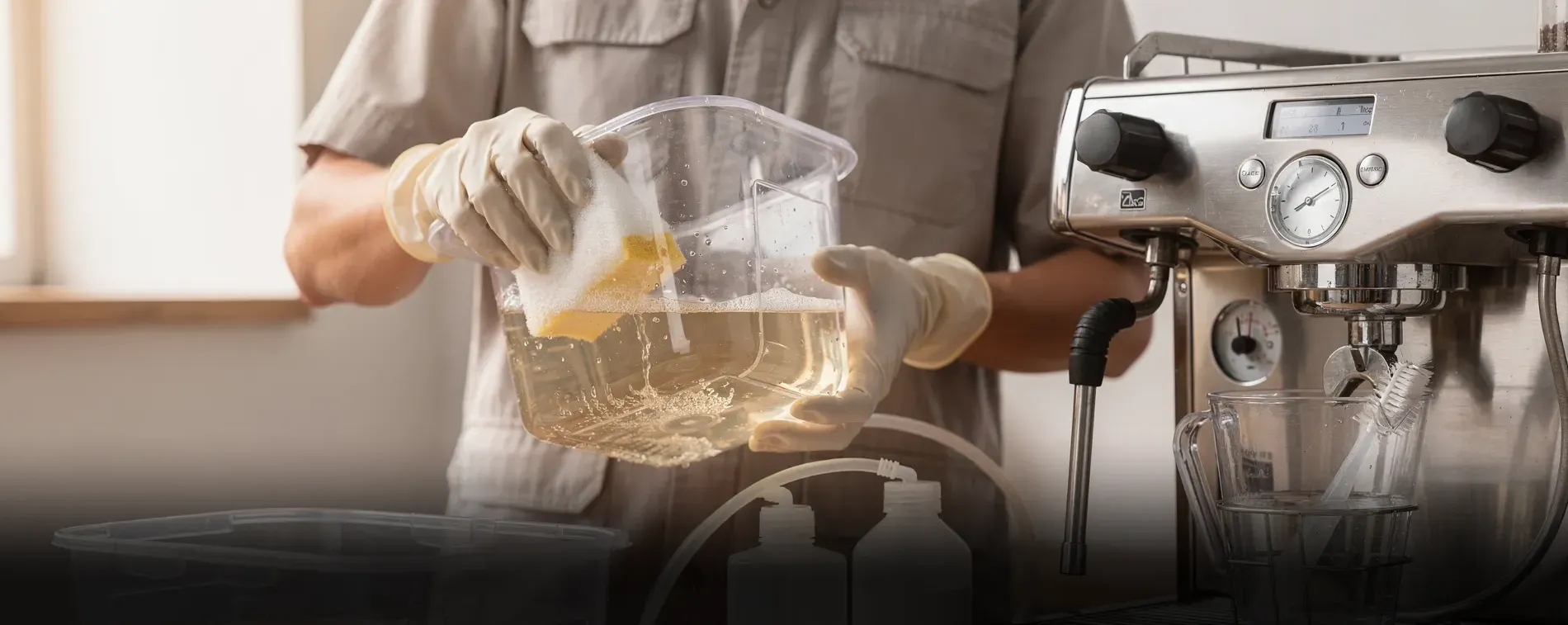
Removing mold from an espresso machine water reservoir and tubing requires a two-step process. First, the reservoir is cleaned with a mild detergent and warm water, scrubbing all interior surfaces. Second, a descaling solution is circulated through the machine’s tubing to eliminate biofilm and algae. 1st-line Equipment provides maintenance products like cleaning agents, cleaning tools, and water treatment solutions.
Key Takeaways
A two-step process removes mold: clean the reservoir with mild detergent and warm water, then circulate descaling solution through the tubing.
A greenish tinge on water tubes signals biofilm accumulation inside the intake lines before any taste defect becomes obvious.
The water reservoir requires cleaning at least every two weeks using mild, non-abrasive dish-wash detergent and warm water.
Dishwasher heat risks melting plastic tanks, and such damage voids warranty coverage unless the owner’s manual explicitly permits it.
Why does mold grow in espresso machines?
Mold and fungus thrive inside an espresso machine because the internal environment provides exactly what these organisms need. Warmth, standing water, and darkness combine to create a persistent biological hazard. Without intervention, the machine becomes a reservoir for contamination that degrades every shot pulled.
What conditions inside an espresso machine support mold?
The water reservoir traps moisture under its lid. This sealed, humid chamber mimics the conditions where mold colonies flourish in nature. Howard Environmental notes that any space remaining warm, moist, and dark functions as a mold magnet. The drip tray collects splashes and silt. The used-pod chamber or portafilter holds nutrient-rich residue that feeds microbial growth.
How do coffee oils and minerals accelerate the problem?
Coffee oils and mineral deposits from water contribute directly to the conditions that promote mold and biofilm. Minerals from water and fatty acids from coffee oils supply the nutrients mold requires. Howard Environmental identifies this combination as creating perfect conditions for growth. The same phenomenon occurs wherever moisture gets trapped in a closed space. Home baristas who neglect regular cleaning unknowingly cultivate a biological film that taints flavor and compromises hygiene.
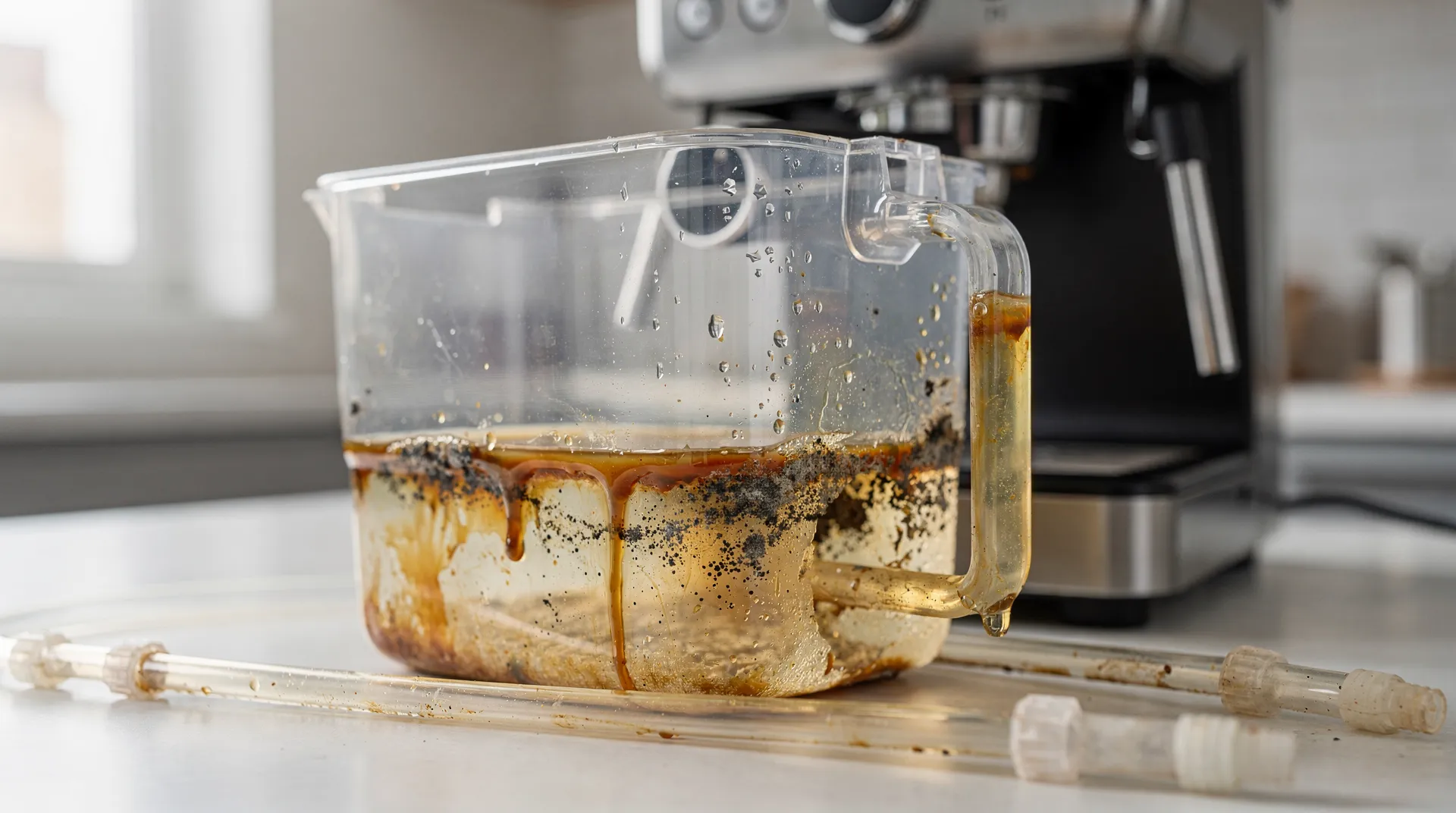
A greenish tinge on water tubes signals biofilm accumulation. This visible indicator confirms that mold or algae has established itself inside the intake lines. The discoloration often appears before any taste defect becomes obvious. Once present, the growth spreads through the system and proves difficult to remove from inaccessible tubing sections.
What tools and materials do you need?
Cleaning an espresso machine water reservoir requires specific, non-damaging supplies. The wrong tools scratch surfaces and create new hiding spots for mold fungus espresso machine water contamination.
A mild, non-abrasive dish-wash detergent forms the foundation of effective reservoir cleaning. 1st-line Equipment recommends this gentle cleaner for water tank maintenance at least every two weeks. Harsh chemicals degrade plastic and leave residues that taint brew water. Never use bleach or other harsh chemicals as these will cause irreparable damage to the espresso machine.
A non-abrasive sponge provides safe scrubbing action. After removing the reservoir from the machine, the sponge works with warm water and a small amount of detergent to lift biofilm without marring the tank interior. Abrasive pads create micro-scratches where mold fungus colonies anchor and resist future cleaning.
1st-line Equipment supplies specialized cleaning agents and water treatment solutions for comprehensive espresso machine care. These products address mineral scale and organic buildup that generic detergents miss.
Can I put my espresso machine water tank in the dishwasher?
No. 1st-line Equipment explicitly advises against placing any espresso machine component, including the water reservoir, into a dishwasher appliance. The only exception occurs when the owner’s manual specifically permits it. Dishwasher heat risks melting plastic tanks, and such damage voids warranty coverage.
What cleaning tools should I avoid?
Avoid abrasive scrubbers entirely. Steel wool, scouring pads, and stiff brushes gouge reservoir walls. These scratches foster recurring mold fungus growth. Stick with the non-abrasive sponge and mild detergent combination for every cleaning cycle.
If mold or fungus is growing inside your hoses, the hoses will need to be replaced.
How do you clean the water reservoir safely?
A safe cleaning routine for an espresso machine water reservoir prevents mold fungus growth and protects component integrity. The water tank requires cleaning at least every two weeks using mild, non-abrasive dish-wash detergent and warm water. Neglecting this schedule allows biofilm and algae to accumulate in the reservoir and intake hoses, compromising both machine performance and beverage quality.
What cleaning supplies are needed for the water tank?
The essential supplies are straightforward. A non-abrasive sponge prevents scratching the reservoir surface. Mild dish-wash detergent dissolves organic residue without leaving harsh chemical traces. Warm water activates the detergent effectively. A clean rinsing cloth completes the kit for wiping external hose surfaces after washing.
Step-by-step reservoir cleaning procedure
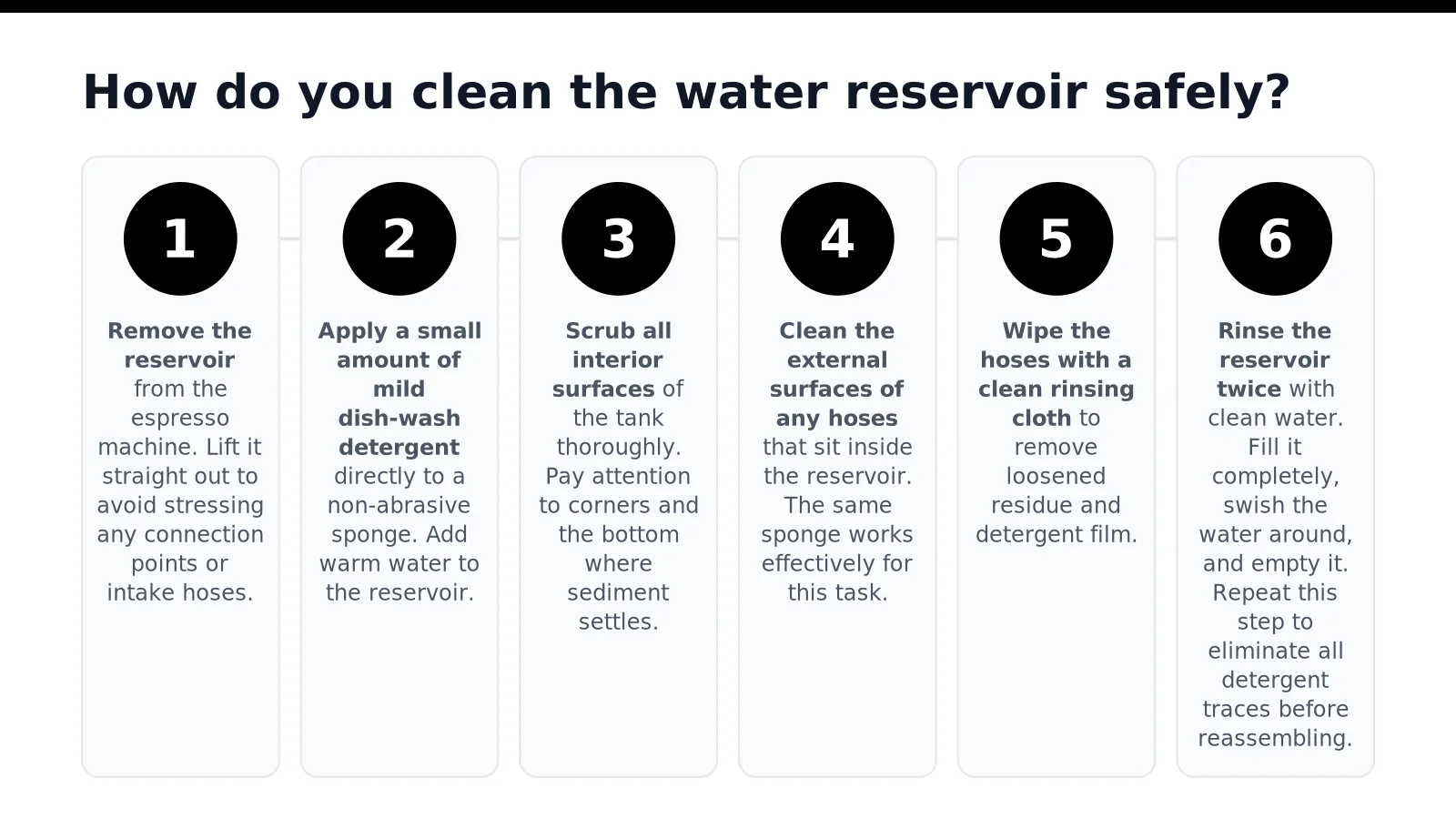
Remove the reservoir from the espresso machine. Lift it straight out to avoid stressing any connection points or intake hoses.
Apply a small amount of mild dish-wash detergent directly to a non-abrasive sponge. Add warm water to the reservoir.
Scrub all interior surfaces of the tank thoroughly. Pay attention to corners and the bottom where sediment settles.
Clean the external surfaces of any hoses that sit inside the reservoir. The same sponge works effectively for this task.
Wipe the hoses with a clean rinsing cloth to remove loosened residue and detergent film.
Rinse the reservoir twice with clean water. Fill it completely, swish the water around, and empty it. Repeat this step to eliminate all detergent traces before reassembling.
Can the water reservoir go in a dishwasher?
Placing espresso machine components in a dishwasher appliance is not recommended unless the owner’s manual explicitly permits it. Excessive heat from dishwasher cycles causes plastic reservoirs to warp or melt. Such damage is not covered under any manufacturer warranty. Hand washing remains the only safe method for these components.
How often should the water tank be cleaned?
The water tank requires cleaning at least every two weeks when the machine operates as a non-plumbed unit. Homes with hard water or visible residue formation benefit from weekly cleaning. Consistent maintenance stops mold fungus spores from establishing colonies in the warm, moist reservoir environment.
How do you disinfect tubing and internal lines?
Disinfecting internal tubing requires a systematic flush with a mild cleaning solution. Mold and mildew accumulate inside water tubes, often appearing as a green tinge that is difficult to access. Left untreated, this contamination compromises espresso flavor and machine performance.
Prerequisites
Before beginning, gather a food-safe cleaning agent formulated for espresso equipment, a clean water source, and a container to catch discharge. 1st-line Equipment offers cleaning agents and tools specifically designed for espresso machine maintenance.
Disinfection Procedure
For silicone tubes only, remove tubes from machine after disassembly
Soak in bleach overnight
Rinse thoroughly with water.
Soak in white vinegar overnight to remove bleach odor.
Rinse thoroughly with water and reinstall.
What causes green residue inside espresso machine water tubes?
Green residue indicates mildew or biofilm formation inside the water lines. This growth thrives in the warm, moist environment of an espresso machine. The mold fungus espresso machine water contamination often starts in the reservoir and spreads through intake tubing.
How can you prevent mold from returning?
Preventing mold fungus espresso machine water contamination requires a disciplined maintenance routine. Without consistent cleaning, biofilm and fungal growth reclaim the warm, moist environment inside the machine within days. The water reservoir, drip tray, and internal tubing all demand regular attention to stop spores from establishing a foothold.
What is the most important cleaning interval for mold prevention?
The water reservoir demands cleaning at least every two weeks. 1st-line Equipment recommends removing the reservoir and washing it with a mild, non-abrasive dish detergent. A non-abrasive sponge removes the slick biofilm that mold uses as a nutrient base. Skipping this biweekly task allows colonies to mature and shed spores into every subsequent shot.
How does water treatment help control fungal growth?
Water treatment solutions reduce the mineral deposits that accelerate biofilm formation. 1st-line Equipment supplies maintenance products including cleaning agents and water treatment solutions designed to keep internal pathways hostile to microbial life. Treated water leaves less residue for mold and fungus to feed on. The result is cleaner tubing and a longer interval between deep cleaning sessions.
Follow this numbered sequence to lock in a mold-resistant environment:
Wash the water reservoir with mild detergent every 14 days.
Empty and scrub the drip tray whenever spent puck residue becomes visible.
Rinse the portafilter immediately after each session to remove nutrient-rich oils.
Apply a water treatment solution to the reservoir with each refill.
Leave the reservoir lid open overnight once a week to let the chamber dry completely.
The drip tray and portafilter collect splashes, silt, and coffee oils that can fuel rapid fungal growth. Cleaning these components daily removes the food source before spores can germinate. A quick routine keeps the espresso machine brewing clean and tasting fresh. Establishing this schedule transforms mold prevention from a crisis response into a background habit that protects both flavor and machine longevity.
FAQ
How often should I clean the water reservoir?
Clean the water reservoir at least every two weeks using mild, non-abrasive dish-wash detergent and warm water.
What supplies does 1st-line Equipment recommend for cleaning?
1st-line Equipment provides maintenance products like cleaning agents, cleaning tools, and water treatment solutions for removing mold.
Conclusion
Consistent adherence to the documented cleaning schedule eliminates the conditions that allow mold to establish colonies inside the water reservoir and tubing. A disciplined routine of biweekly reservoir washing, monthly line flushing, and daily drip tray and portafilter maintenance prevents biofilm from forming. This approach protects espresso flavor and extends machine service life without requiring specialized intervention.